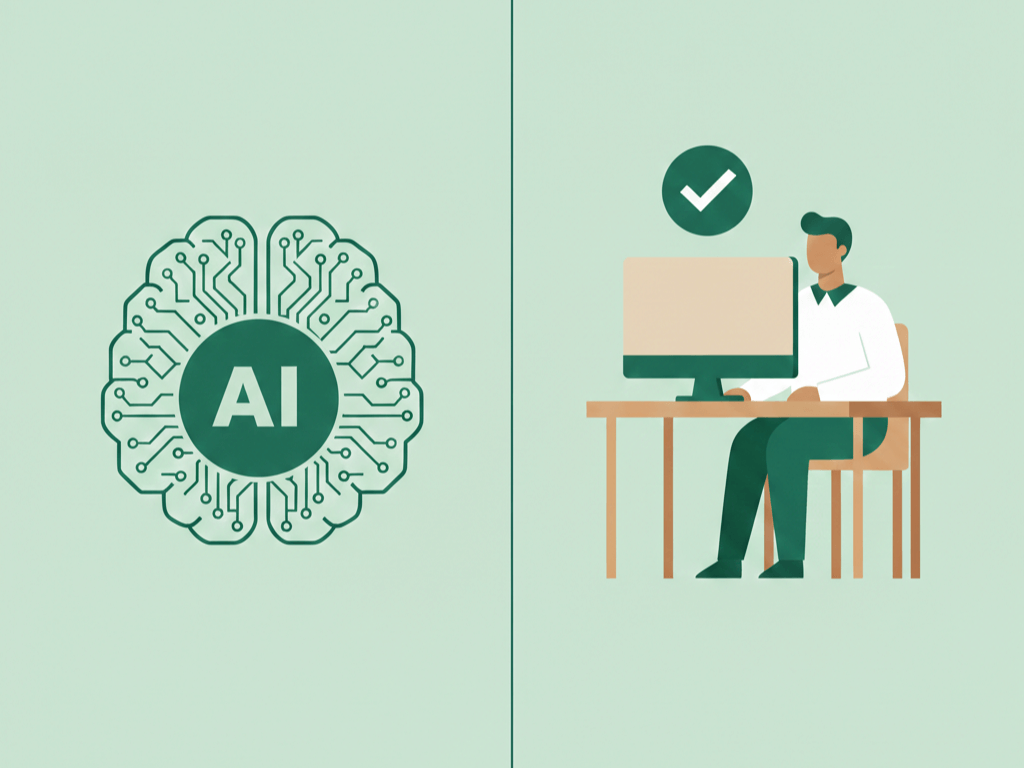

You’ve probably seen the ads. AI-powered tax software promising to maximize your refund in minutes. Chatbots claiming they can answer any tax question. And slick interfaces suggesting tax preparation has become as simple as uploading a few documents.
But how much are these tools gambling with your financial security?
The companies selling AI tax solutions aren’t being dishonest about what their technology can do. They’re just not telling you what it can’t do. And those gaps could cost you thousands in missed deductions or trigger an audit. Or you could be saddled with penalties that dwarf whatever you saved on preparation fees.
Here’s what makes AI particularly dangerous for taxes: it doesn’t know when it’s wrong. Recent studies found that tax chatbots provided incorrect or misleading answers nearly half the time, yet delivered those wrong answers with complete confidence. The technology is literally designed to sound authoritative—not to be accurate.
In some cases, AI misclassified a client’s side business as a hobby, disallowing legitimate deductions that would have saved them $8,000.
We’ve seen software confidently claim eligibility for specialized credits the taxpayer didn’t qualify for, setting them up for future headaches when the IRS catches the error. These aren’t edge cases. This is how AI operates when it encounters situations outside its training data.

Your small business tax situation isn’t just numbers on forms. It’s the story behind those numbers, and that’s where human judgment becomes irreplaceable.
When you tell us about your business restructuring, we’re asking follow-up questions about timing, ownership percentages, and future plans. Those details determine which tax treatment saves you the most money.
When you mention consulting income from multiple states? We’re considering:
When you’re deciding whether to classify certain expenses as business or personal? We’re having a conversation about intent, consistency, and audit risk that no algorithm can replicate.
AI sees data points. We see context. That difference matters when tax law lives in gray areas that require professional judgment.
Tax law changed significantly in 2025, with new provisions affecting:
By the time you read this, there may be more updates. AI models trained on last year’s tax code can’t help you navigate this year’s reality. They’re fundamentally backward-looking tools operating in a constantly evolving landscape.
Every year, our team spends hours on:
That’s not something software can replace with an update.
Here’s the reality nobody mentions in those cheerful AI tax ads: when the IRS audits your return, the software isn’t taking responsibility. You are.
AI can’t explain its reasoning to an auditor. It can’t testify about the professional judgment behind a particular treatment. It can’t even take an oath. Meanwhile, the IRS is using its own AI to flag unusual returns, meaning errors from your AI tax tool are more likely to attract scrutiny.
When you upload your financial information to free or low-cost AI tax tools, where is that data going? Some platforms use your sensitive information to train their models. Others have unclear data retention policies. You’re potentially exposing Social Security numbers, income details, and financial account information to systems with uncertain security standards.
Professional tax preparers are bound by strict confidentiality requirements and professional liability standards. We have secure systems, encryption protocols, and malpractice insurance. AI chatbots have none of these protections.

We’re not suggesting AI has no place in tax preparation. In our firm, we use specialized AI tools for specific tasks:
These applications leverage AI’s strengths while keeping critical judgment where it belongs—with experienced professionals.
The difference is oversight. Every AI-assisted task gets reviewed by someone who understands both the technology’s capabilities and its limitations. We catch the confident hallucinations before they become costly mistakes on your return.
Your small business tax return isn’t just about this year’s refund. It’s about building a sustainable financial strategy and minimizing lifetime tax liability. It’s about someone who knows your full financial picture, making recommendations that save you money long-term.
That’s not what you get from an algorithm. That’s what you get from a relationship with a tax professional who understands your goals and your unique situation.
If you’ve been using DIY tools and wondering whether you’re leaving money on the table or taking unnecessary risks, let’s have a conversation. If you’re concerned about whether your current tax preparer is relying on AI blindly, we’d welcome that discussion too.
Schedule a complimentary tax situation review this month. We’ll look at your prior returns, discuss your current financial picture, and give you a clear assessment of where professional guidance could make a difference. No obligation, just honest advice about whether our services are right for you.
Because your taxes deserve human judgment and someone who’s accountable when things get complicated.
Contact our office at 207-800-3198 or email grow@cultivateconsulting.co to schedule your review.

Christine Gervais
Christine Gervais is a licensed CPA, using her skills to help businesses grow and achieve their fullest potential. Christine has a Master’s degree in accounting from Southern New Hampshire University in addition to holding her CPA license for over a decade. Notably, Christine is a nationally recognized speaker providing education to other CPAs on how to best serve clients as well as instruction on a wide variety of topics for business owners on how to maximize success. Christine prides herself on the value she can bring to clients with her extensive tax knowledge and provides strategic, forward-thinking financial strategies to help clients grow. When not behind her desk, you can find Christine spending quality time with her daughter and stepson or tending to the family’s excessively loved farm animals.